Keep in mind the Phil Collins song "Another day in paradise" follows that verse with "oh, think twice"
Boating is like that.
Yesterday I was fortunate to have one of those moments that really make a sailor happy.
I helped a friend install something on his boat that he considered so vital it was the first thing he bought after the boat itself. I'll not argue the merits, nor say what it was so you won't be able to either. It was a piece of electronic gear that he considered safety related. We'll leave it at that.
This piece of gear (herein after referred to as 'device') needed power. The boat it was being installed in is a 1969 boat with what might well be the original power panel(s) and several layers of "upgrades" on the battery switch and wiring. The battery is recent and with a good charge.
So we dove in to the spaghetti and tried to decide which switch on which panel to hook into...
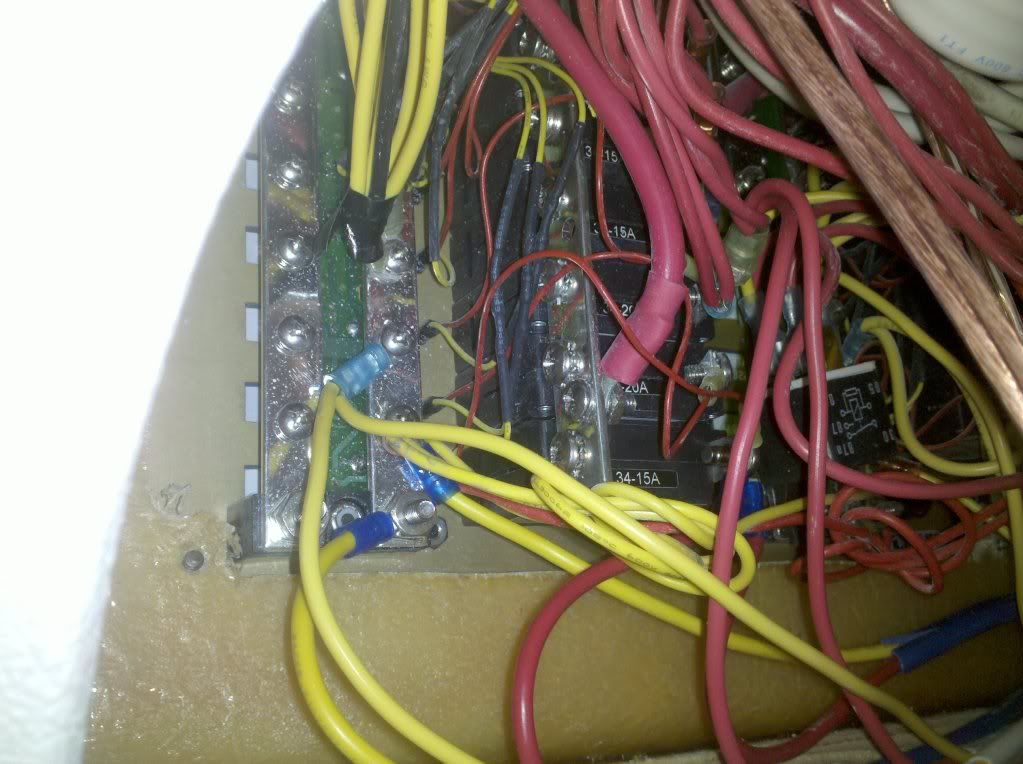
That's the back side of my 'ABYC' compliant panel - on a 4 year old boat.
Imagine what his looks like.
So, we went with the 'easy' answer - a temporary hook up to the battery. Followed by a complete rip out of all circuits and wiring and replacement with up to date systems within reason.
No wait, really, that's the easy answer?
To complete a 20 minute install of a simple, common device the easy answer is to rip out everything and start again?
Welcome to boating - especially to boating on old boats. It's not so much the requirements and standards changing, although that plays a large part - it's also the thing boaters call the PO.
PO stands for "previous owner". Sometimes it's a epithet, sometimes it's not. Really old boats have 9 or 10 of these folks, each with their own way of doing things. Some "correct" so not so "correct", some slip shod, some not. Occasionally a PO puts in some really nice stuff that works right - then we love 'em.
Step two (step one was coming to the conclusion that the existing we'll call it 'arrangement' was temporary ) by necessity was to see what does work on the boat electrically speaking. The good news was all the safety stuff worked (navigation lights etc.).
So, no hurries, no worries.
Except the new device is still hard wired to the battery (we disconnected before leaving).
It was already getting dark so we had to quit for the day - that's right, a 20 minute job took all evening.
Rule #1 on boat maintenance and upgrades, figure the time required and multiply by twice the number of beers (or Rum and cokes etc.) you will consume, then double for every other sailor involved. You can quote me on that.
This was a one beer job, but had two sailors on it. 20 minutes x 2 x 2 = 80 minutes. Start time was 6:00 and finish was 7:15. See, we did good.
Oh, crap. I started this post with the "happy sailor" moment so let me get back to that.
We powered it up, it came on and worked completely and correctly. The smile on his face, the high five slap and the poking and prodding as we put the device through it's paces. That's the moment.
Oh heck, it was a combination chart plotter and depth sounder. And for what he payed for it, a damn fine addition.
Thursday, September 29, 2011
Wednesday, September 28, 2011
The other woman (er.. boat)
Tuesday, September 27, 2011
How to Sail #1 Tacking a multihull (Comedy hour)
I do not recommend reading this while drinking a sticky drink, nor am I responsible for keyboards, monitors or other stuff on your desktop if you ignore this warning.
Generally tacking a multihull is somewhat different. I leave instructions posted at my helm station in case I forget, the printable part of the step by step instructions is included below for your reading pleasure:
How to tack a multihull
(tacking means turning with the bow going through the wind, gybing is turning with the wind behind you)
Steps to Tacking:
Decide if you really need to tack (try to stay away from hard objects or shallow (2 feet) depths. Check the speed log and/ or GPS to make sure you are actually moving in the water. Try to remember if you are anchored, if not anchored proceed, if anchored you probably don't need to tack after all.
Review the glossary section of this manual if any of the terms below are fuzzy in your head.
Inform the Admiral that the position of the sun and direction of the wind may change momentarily, she might need to adjust her position for optimum suntan and or cooling. Try to speak with a "Harvard" accent so it sounds nautical. It makes her giggle.
Put down your drink, you may need both hands if something weird happens (again).
Approach the helm, look up and forward to the jib and determine which way you will tack, (left or right). As a reminder a tack is turning away from the sail, gybing is turning towards the sail. If you need to gybe, turn to the ‘how to gybe' page of this book.
Push the appropriate buttons on the Autopilot to start the tack. Alternatively, if you are feeling really energetic, you can turn the wheel. Don't, I say again, DON'T forget to turn it back to the center when done turning.
Wait – Leer at the Admiral, maybe if she’s moving parts of her bikini might not be yet (again ;) )
Release the working jib from the self tailing winch, do not unwrap the line.
Wait – now is a good time to refill the Admiral’s foo-foo drink and replace the little umbrella in the glass if she lost it.
Wait – check the compass and make sure it is spinning around. That means either you are in fact turning, or you put the coffee pot next to it again.
When (if) the bow crosses the wind the jib will flap louder than the music, this is your clue that you are about to back wind the jib and you should look towards the front of the boat.
At some point the main sail, and the boom will swing over from one side to the other with a loud crash. Don’t be alarmed and run away (again) - this is normal.
When the jib is back winded (see glossary if necessary), count to three, or four, slowly (use all the fingers on one hand).
Release the wraps on the winch so the working jib sheet runs free. Don't let the jib sheet fall over the side, remember the last time when everyone was laughing?
Walk (do not run) over to the new working winch on the other side of the boat, put three wraps on the winch but do not tail (pull) the line.
Isn't it fun how sailors have fancy words for simple things?
Wait – now is a good time to replenish your sun screen.
Pull in the jib sheet to remove all slack, do not strain yourself as neither speed nor effort matter. This is the part 'guests' are good for - it makes them feel important. Just as a side note - giving the wheel to a guest and not telling them the autopilot is on may appear fun, but it has possible consequences most of which are not fun.
If the jib remains back winded you are ‘caught in irons’ and are possibly screwed. If anyone is watching, announce loudly that you have decided to take a break and are now 'hove to', release the main sheet a little bit and go back to your drink - it will still be where you left it.
If caught in irons, turn to the 'caught in irons' page of this manual and follow the instructions (basically call TowboatUS, (again)).
If the jib is not back winded you are truly fortunate and have completed the hard part of the tack which is to get the bow through the wind. Winch in the slack until at least one of the tell tales is fluttering in the breeze (sort of horizontal). You can winch until they all are horizontal if you want, doesn't matter too much but will look more sailor like.
Look up at the main and if the tell tales are not hanging limp you are done. If they are hanging limp pull in or let out on the mainsheet and observe the tell tales, play with it until at least one tell tale is fluttering.
Check the speed log and or GPS to make sure you are moving through the water. Give it a minute to settle down and start moving if needed.
Check the autopilot, if it is cycling insanely and beeping you probably can't make what it considers to be a good course, hit the standby button, wait a second and hit the auto button, it will now maintain your current course as the new course. You should probably look up to see if anything is in your way. If so blow the horn three times and flip this page to the 'Collision response directions' side and follow the instructions (basically call insurance company, again)
Go back to where you left your drink, it will still be there.
Admire the Admiral in her new position leeringly (if leeringly is not a word you know what I mean).
Ponder the joy of sailing until your next forced tack. Don’t forget to use sunscreen.
Did you really expect serious sailing instructions from me? Google it :)
Generally tacking a multihull is somewhat different. I leave instructions posted at my helm station in case I forget, the printable part of the step by step instructions is included below for your reading pleasure:
How to tack a multihull
(tacking means turning with the bow going through the wind, gybing is turning with the wind behind you)
Steps to Tacking:
Decide if you really need to tack (try to stay away from hard objects or shallow (2 feet) depths. Check the speed log and/ or GPS to make sure you are actually moving in the water. Try to remember if you are anchored, if not anchored proceed, if anchored you probably don't need to tack after all.
Review the glossary section of this manual if any of the terms below are fuzzy in your head.
Remember, if you brought 'guests' that want to learn to sail you can get them to do all the work by inviting them to try and tack your boat.
Inform the Admiral that the position of the sun and direction of the wind may change momentarily, she might need to adjust her position for optimum suntan and or cooling. Try to speak with a "Harvard" accent so it sounds nautical. It makes her giggle.
Put down your drink, you may need both hands if something weird happens (again).
Approach the helm, look up and forward to the jib and determine which way you will tack, (left or right). As a reminder a tack is turning away from the sail, gybing is turning towards the sail. If you need to gybe, turn to the ‘how to gybe' page of this book.
Push the appropriate buttons on the Autopilot to start the tack. Alternatively, if you are feeling really energetic, you can turn the wheel. Don't, I say again, DON'T forget to turn it back to the center when done turning.
Wait – Leer at the Admiral, maybe if she’s moving parts of her bikini might not be yet (again ;) )
Release the working jib from the self tailing winch, do not unwrap the line.
Wait – now is a good time to refill the Admiral’s foo-foo drink and replace the little umbrella in the glass if she lost it.
Wait – check the compass and make sure it is spinning around. That means either you are in fact turning, or you put the coffee pot next to it again.
When (if) the bow crosses the wind the jib will flap louder than the music, this is your clue that you are about to back wind the jib and you should look towards the front of the boat.
At some point the main sail, and the boom will swing over from one side to the other with a loud crash. Don’t be alarmed and run away (again) - this is normal.
When the jib is back winded (see glossary if necessary), count to three, or four, slowly (use all the fingers on one hand).
Release the wraps on the winch so the working jib sheet runs free. Don't let the jib sheet fall over the side, remember the last time when everyone was laughing?
Walk (do not run) over to the new working winch on the other side of the boat, put three wraps on the winch but do not tail (pull) the line.
Isn't it fun how sailors have fancy words for simple things?
Wait – now is a good time to replenish your sun screen.
Pull in the jib sheet to remove all slack, do not strain yourself as neither speed nor effort matter. This is the part 'guests' are good for - it makes them feel important. Just as a side note - giving the wheel to a guest and not telling them the autopilot is on may appear fun, but it has possible consequences most of which are not fun.
If the jib remains back winded you are ‘caught in irons’ and are possibly screwed. If anyone is watching, announce loudly that you have decided to take a break and are now 'hove to', release the main sheet a little bit and go back to your drink - it will still be where you left it.
If caught in irons, turn to the 'caught in irons' page of this manual and follow the instructions (basically call TowboatUS, (again)).
If the jib is not back winded you are truly fortunate and have completed the hard part of the tack which is to get the bow through the wind. Winch in the slack until at least one of the tell tales is fluttering in the breeze (sort of horizontal). You can winch until they all are horizontal if you want, doesn't matter too much but will look more sailor like.
Look up at the main and if the tell tales are not hanging limp you are done. If they are hanging limp pull in or let out on the mainsheet and observe the tell tales, play with it until at least one tell tale is fluttering.
Check the speed log and or GPS to make sure you are moving through the water. Give it a minute to settle down and start moving if needed.
Check the autopilot, if it is cycling insanely and beeping you probably can't make what it considers to be a good course, hit the standby button, wait a second and hit the auto button, it will now maintain your current course as the new course. You should probably look up to see if anything is in your way. If so blow the horn three times and flip this page to the 'Collision response directions' side and follow the instructions (basically call insurance company, again)
Go back to where you left your drink, it will still be there.
Admire the Admiral in her new position leeringly (if leeringly is not a word you know what I mean).
Ponder the joy of sailing until your next forced tack. Don’t forget to use sunscreen.
Did you really expect serious sailing instructions from me? Google it :)
A note on ,'s and grammar
This blog ain't about grammar, it's not about punctuation, spelling or in any way to be considered literature.
If that's is what you are looking for just let me know. I will email you the drafts of my posts and you can correct them (not mark them up with a red pen, actually MAKE the correction) and send them back to me.
Every time you do that you can take yourself out to dinner and mail me the original bill.
I won't pay it, I just want to A) support my local post office; and B) laugh at you.
If that's is what you are looking for just let me know. I will email you the drafts of my posts and you can correct them (not mark them up with a red pen, actually MAKE the correction) and send them back to me.
Every time you do that you can take yourself out to dinner and mail me the original bill.
I won't pay it, I just want to A) support my local post office; and B) laugh at you.
Light Wind, first sail
No, not my first sail. Mark's.
I moderate at the Anything-Sailing.com forum and a couple weeks ago I met a new aspiring sailor over there that had just purchased an 1969 Coronado 25 footer. I went with him to look at it on it's anchorage and decided on the spot to bring it back to my dock instead of leaving it anchored where it was.
I put him in the slip to the side, and life is good.
Seriously, I figure if you have it, share it. Cost me nothing but time - and since that was and will be time on the water that's not time lost at all.
To make a long story shorter, this past weekend was clean up and inventory time - and yesterday we had about 5kts of wind - a perfect day for a first ever sail. So we did.
Both the jib and the main sail are pretty much ready for the scrap heap, but what the heck - the boat moved under wind power only and that counts as sailing. Three hours of short tacking and a little drifting made a wonderful first sail experience for Mark and served as a nice breakdown cruise for the boat.
I moderate at the Anything-Sailing.com forum and a couple weeks ago I met a new aspiring sailor over there that had just purchased an 1969 Coronado 25 footer. I went with him to look at it on it's anchorage and decided on the spot to bring it back to my dock instead of leaving it anchored where it was.
I put him in the slip to the side, and life is good.
Seriously, I figure if you have it, share it. Cost me nothing but time - and since that was and will be time on the water that's not time lost at all.
To make a long story shorter, this past weekend was clean up and inventory time - and yesterday we had about 5kts of wind - a perfect day for a first ever sail. So we did.
Both the jib and the main sail are pretty much ready for the scrap heap, but what the heck - the boat moved under wind power only and that counts as sailing. Three hours of short tacking and a little drifting made a wonderful first sail experience for Mark and served as a nice breakdown cruise for the boat.
Monday, September 26, 2011
Let's start typing
Here we go.
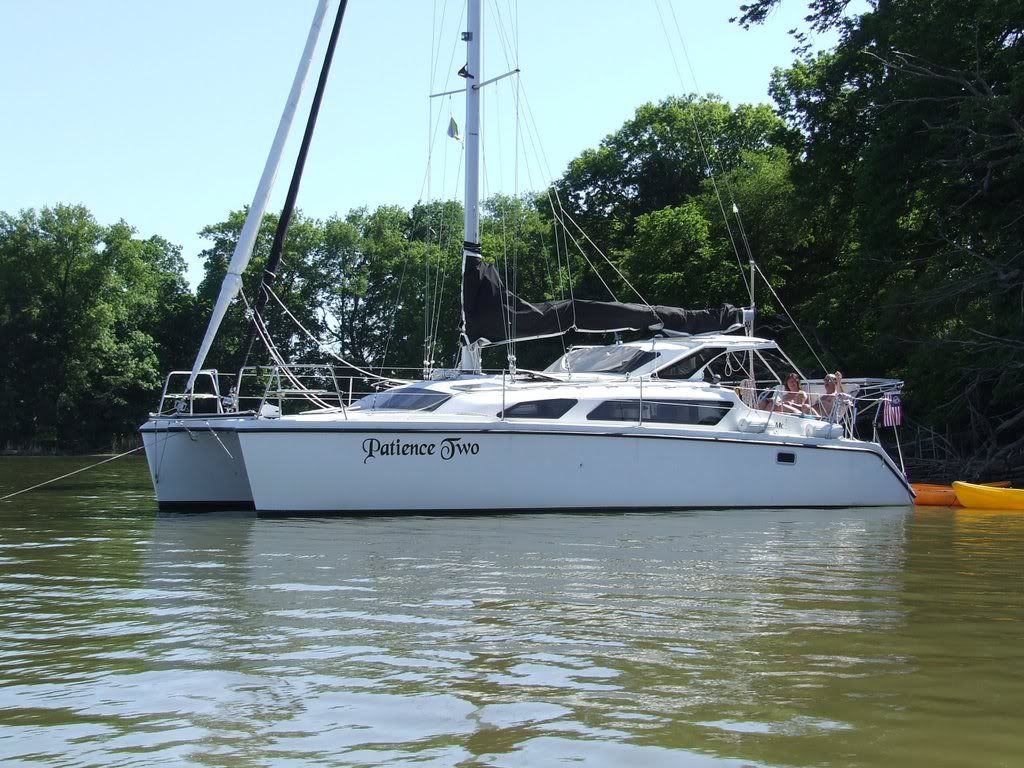
About me etc..My Admiral (Mary) and I have a 2007 Gemini 105Mc Catamaran. That's a 33.5 foot by 14 foot queen bed, three cabin floating condo for the non-sailor in the crowd.
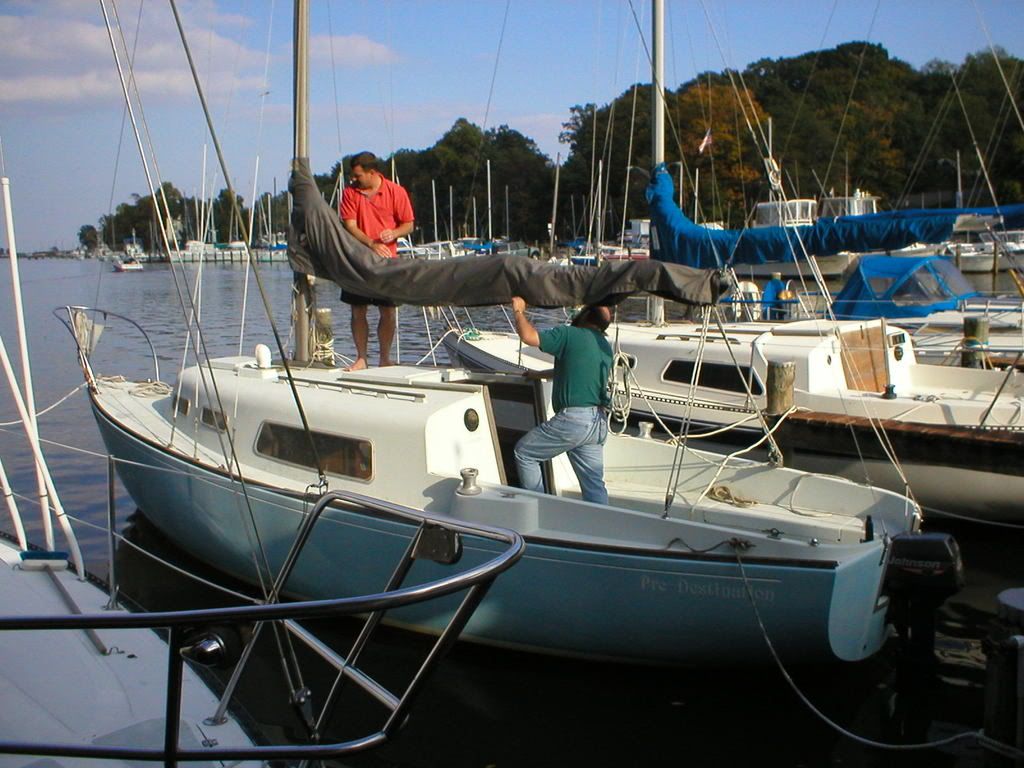
It's our third boat in just 8 years, we're hoping it's going to stay with us for a while. We started sailing on a friends 22 ft Catalina in September, in October I bought our first boat, a 1972 Grampian 26:
Here I am checking it out before my first sail.
Mary and I made the commute from Winchester Va to Annapolis (2 hours) almost every weekend from October through February learning to sail and making sure we liked it and it liked us. I read every book I could find on the subject.
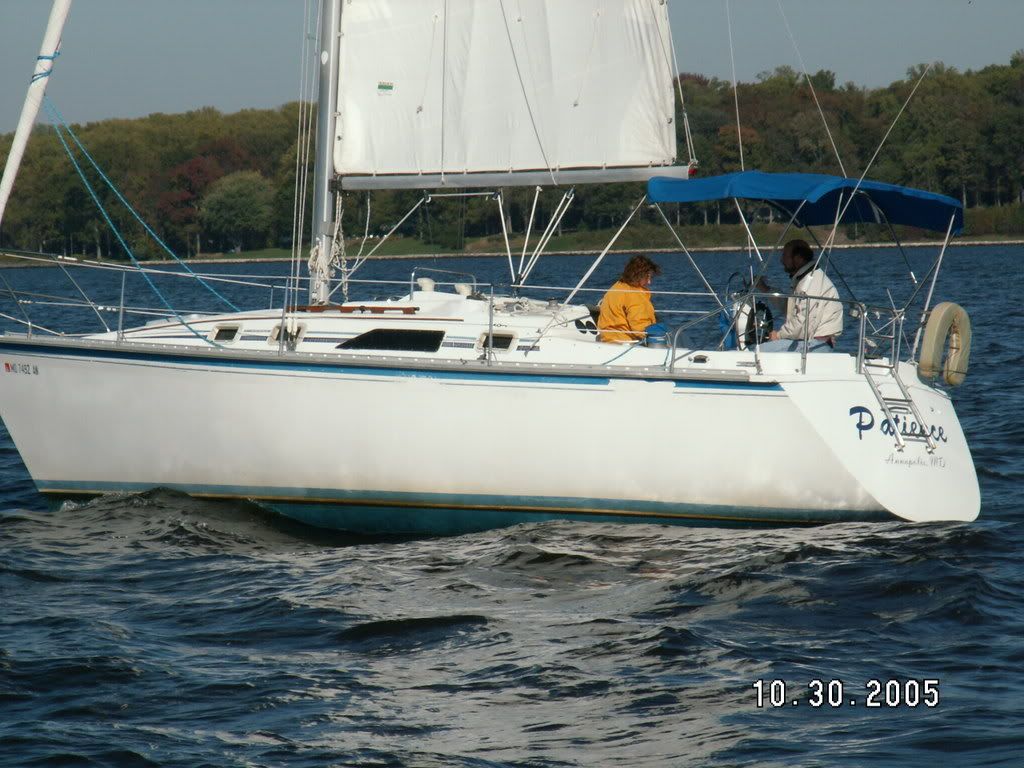
In February we began the search for a bigger boat, we were hooked. That lead to Patience.
Patience was not it's original name. Swallow was it's original name. After much thinking and ouija board action we decided to name the boat after what we had discovered was the one virtue that is always needed on a sailboat. Patience. For so many reasons it has fit.
A good example of why?
We bought the boat in April, gave the old boat to a local youth sailing group rather than sell it so we could get it out of our slip faster.
Not good enough?
The following March we decided to institute a 3 year plan to move from Winchester to Annapolis because we were tired of the two hour each way trips to go sailing.
Still not good enough?
We found a house that enabled us to look out the window and see our boat three months later, bought it, moved and put the other house on the market.
Three years later, we put the down payment on Patience Two (catamaran and second boat named Patience, you getting it yet?).
Our side trip into power boats - a Crownline 250CR was named Impatience
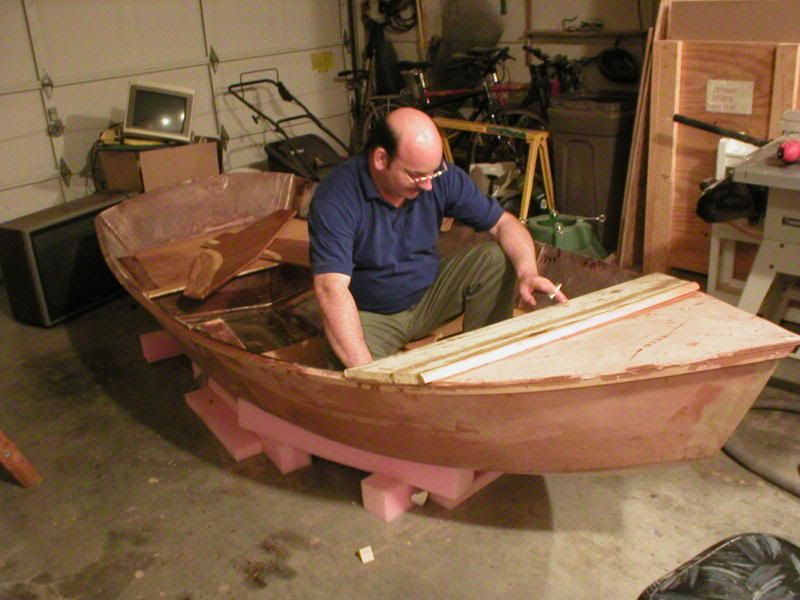
The 10 foot dinghy I built from plans - um, Lil Patience
The Rigid Inflatable Dinghy, we refer to it as Blown Patience
I'll leave you with that for now - I see at least 5 kts of wind out my office window. Time to play hooky with a new sailor.
About me etc..My Admiral (Mary) and I have a 2007 Gemini 105Mc Catamaran. That's a 33.5 foot by 14 foot queen bed, three cabin floating condo for the non-sailor in the crowd.
It's our third boat in just 8 years, we're hoping it's going to stay with us for a while. We started sailing on a friends 22 ft Catalina in September, in October I bought our first boat, a 1972 Grampian 26:
Here I am checking it out before my first sail.
Mary and I made the commute from Winchester Va to Annapolis (2 hours) almost every weekend from October through February learning to sail and making sure we liked it and it liked us. I read every book I could find on the subject.
In February we began the search for a bigger boat, we were hooked. That lead to Patience.
Patience was not it's original name. Swallow was it's original name. After much thinking and ouija board action we decided to name the boat after what we had discovered was the one virtue that is always needed on a sailboat. Patience. For so many reasons it has fit.
A good example of why?
We bought the boat in April, gave the old boat to a local youth sailing group rather than sell it so we could get it out of our slip faster.
Not good enough?
The following March we decided to institute a 3 year plan to move from Winchester to Annapolis because we were tired of the two hour each way trips to go sailing.
Still not good enough?
We found a house that enabled us to look out the window and see our boat three months later, bought it, moved and put the other house on the market.
Three years later, we put the down payment on Patience Two (catamaran and second boat named Patience, you getting it yet?).
Our side trip into power boats - a Crownline 250CR was named Impatience
The 10 foot dinghy I built from plans - um, Lil Patience
The Rigid Inflatable Dinghy, we refer to it as Blown Patience
I'll leave you with that for now - I see at least 5 kts of wind out my office window. Time to play hooky with a new sailor.
Subscribe to:
Posts (Atom)